The pathway to earning a professional pilot certificate has undergone a fundamental transformation. By 2026, the days of logging hours exclusively in a Cessna 172 with round dials are fading into the past. A new digital ecosystem now governs the journey from student to airline captain.
The End of the “Steam Gauge” Era
The term “steam gauge” refers to the traditional analog instruments found in older aircraft. For decades, mastering these instruments was the primary method of learning basic attitude flying. While foundational knowledge remains valuable, the modern cockpit is now a glass-paneled digital environment.
The Federal Aviation Administration (FAA) and European Union Aviation Safety Agency (EASA) have updated their syllabi accordingly. Training organizations must now integrate advanced avionics from the very first lesson. This shift ensures that students are not learning obsolete skills.
Why the Change Matters
- Industry Alignment: Modern airlines operate with fully digital cockpits like the Airbus A350 or Boeing 787. Training on legacy equipment creates a costly transition period.
- Safety Data: Studies show that pilots trained on digital systems from the start have a lower rate of automation-related errors.
- Cost Efficiency: Advanced simulation reduces the need for expensive aircraft rental time, lowering the overall cost of certification.
The Rise of Immersive Technologies in Training
Extended Reality (XR) and Mixed Reality (MR) are no longer experimental tools. They are now approved training devices for specific procedural tasks. These technologies allow students to build muscle memory for checklists, emergency flows, and cockpit familiarization without leaving the ground.
The key advantage is immersion. A student wearing an XR headset can practice engine failure procedures in a realistic 3D environment. This level of repetition is impossible to achieve safely in an actual aircraft during early training stages.
Key Applications of XR and MR
- Procedural Familiarization: Learning the layout of a complex glass cockpit before ever entering the aircraft.
- Emergency Drill Practice: Repeating critical memory items for engine fires, system failures, or loss of pressurization.
- Spatial Awareness Training: Developing the ability to scan instruments and manage traffic in a low-stakes virtual environment.
Competency-Based Training and Assessment (CBTA)
The most significant regulatory shift in 2026 is the widespread adoption of CBTA. This model moves away from the outdated “hours-based” system. Under CBTA, a student progresses based on demonstrated proficiency, not merely on time spent in a seat.
This approach is data-driven and objective. Instructors evaluate specific competencies such as precision flying, decision-making, and crew resource management. A student who masters skills quickly can progress faster, while those needing more time receive targeted remediation.
The Core Competencies Assessed
- Application of Knowledge: Understanding aircraft systems, regulations, and aerodynamics.
- Procedural Compliance: Following standard operating procedures without deviation.
- Communication: Effective radio calls and crew coordination.
- Problem Solving: Managing unexpected situations with sound judgment.
The Mechanics of “Zero-Flight-Time” Type Ratings
A type rating is the certification required to operate a specific aircraft model, such as a Boeing 737 or Airbus A320. Historically, this required significant time in a full-motion simulator and often actual flight time. The “Zero-Flight-Time” (ZFT) concept changes this entirely.
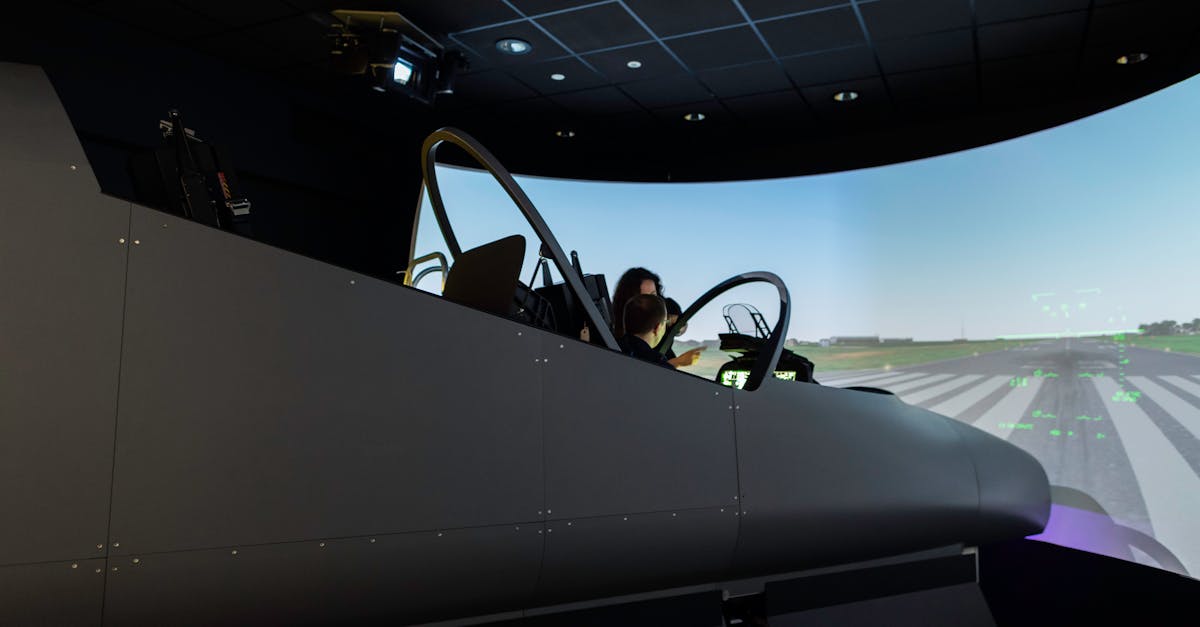
ZFT type ratings are conducted entirely in high-fidelity Full Flight Simulators (FFS) that are qualified for the highest level of training. These simulators are so realistic that the regulator accepts them as a complete substitute for actual aircraft time. The pilot earns their rating without ever leaving the ground.
Requirements for ZFT Success
- Prior Experience: ZFT is typically available only to pilots with a valid Commercial Pilot License and Instrument Rating.
- Advanced Simulator Technology: The simulator must have a 180-degree visual system, motion platform, and accurate flight dynamics.
- Structured Curriculum: A tightly managed syllabus covering normal operations, abnormal procedures, and line-oriented flight training.
AI-Powered Debriefing: The New Standard
One of the most impactful technologies in 2026 training is the use of artificial intelligence for debriefing. After a simulator session, AI tools automatically analyze every maneuver the pilot performed. The system compares the pilot’s performance against industry benchmarks and regulatory standards.
This removes subjective bias from the evaluation process. A student can see exactly where they deviated from the ideal glide path or where their radio call was non-standard. The AI provides instant, objective feedback that accelerates the learning curve.
Benefits of Automated Debriefing
- Consistency: Every student receives the same high-quality analysis regardless of the instructor’s experience level.
- Data Tracking: Performance trends are tracked over time, highlighting areas of improvement or regression.
- Efficiency: Instructors can focus on coaching rather than manual note-taking, making debrief sessions more productive.
Navigating the eVTOL Regulatory Pathway
The emergence of electric vertical takeoff and landing (eVTOL) aircraft is creating a new category of pilot certification. These vehicles, often called air taxis, require a unique skill set. They blend helicopter-like hovering capability with fixed-wing forward flight.
Regulators have introduced specific training pathways for eVTOL pilots. These programs focus on battery management, multi-rotor aerodynamics, and autonomous system monitoring. The training is modular and often heavily reliant on simulation due to the limited availability of actual eVTOL aircraft.
Key Training Modules for eVTOL Pilots
- Power Management: Understanding battery discharge curves and emergency power reserve strategies.
- Transition Flight: Mastering the aerodynamic shift from vertical hover to horizontal cruise.
- Noise Abatement: Operating within strict community noise regulations.
- Contingency Management: Handling system failures in a vehicle with distributed electric propulsion.
Practical Steps for the Modern Trainee
For those beginning their journey in 2026, the path is clearer than ever. The first step is to choose a training organization that has fully embraced the digital ecosystem. Look for schools that offer XR familiarization tools and CBTA-based syllabi.
Next, invest in a strong foundation of procedural knowledge. The tools are advanced, but the core principles of aerodynamics, weather, and regulations remain essential. Use the available technology to rehearse procedures until they become second nature.
Checklist for Selecting a Training Program
- Does the program use FAA or EASA-approved advanced simulation devices?
- Is the curriculum based on CBTA principles rather than minimum hours?
- Are AI debriefing tools integrated into the training workflow?
- Does the school offer pathways for both traditional jet and eVTOL certification?
The aviation industry is evolving rapidly, and the training methods of 2026 reflect that pace. By understanding the mechanics of XR, CBTA, ZFT ratings, AI debriefing, and eVTOL pathways, you can navigate this new landscape with confidence. The technical facts are clear: modern pilot education is now a data-driven, immersive, and competency-focused endeavor. The information presented here provides the foundational knowledge required to make informed decisions about your professional flight certification journey.
- The 2026 Aviation Training Guide – 23/04/2026
- The 2026 Home Water Purity Guide – 22/04/2026
- The Business Mobile Solutions Guide – 20/04/2026

Leave a Reply