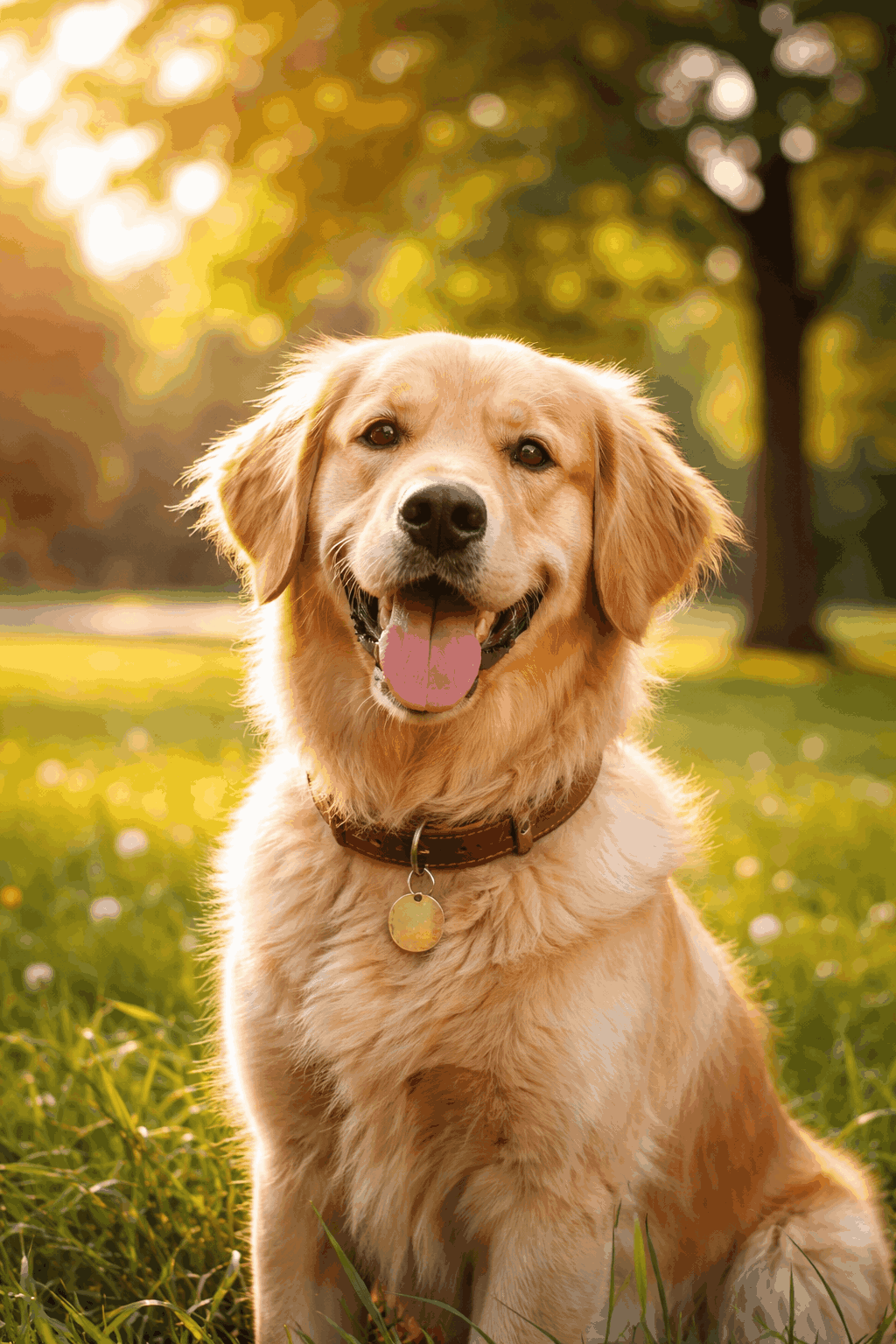
The relationship between a human and a dog is a unique partnership, built on a foundation of mutual understanding that must be intentionally constructed. For too many owners, training devolves into a cycle of frustration, characterized by repeated commands, confusion, and a sense that their companion simply isn’t listening. This common struggle stems not from a stubborn or disobedient animal, but from a fundamental communication gap between two different species.
Effective canine education is not about asserting dominance or suppressing personality. It is a technical, compassionate application of behavioral science designed to translate our intentions into a language a dog’s brain can process and act upon. By moving beyond folklore and trial-and-error, we can build a reliable partnership based on clarity, trust, and predictable results.
Bridging the Communication Gap: The Role of the Event Marker
At the heart of modern, science-based instruction is a concept known as event marking. Think of this as a precise, consistent signal—often a click from a handheld device or a specific verbal word like “Yes!”—that tells the dog, “That exact behavior is what earns the reward.” This tool solves a critical timing problem.
Without a marker, there is often a delay between a dog performing a desired action and receiving a treat. The dog might associate the reward with standing up after the sit, or with the treat bag rustling, rather than with the initial sit itself. An event marker bridges this gap with millisecond precision.
- Creates Clarity: It pinpoints the precise moment of success, eliminating guesswork for the learner.
- Accelerates Learning: By providing immediate information, it helps the dog understand which actions are valuable much faster.
- Builds Confidence: The consistent feedback loop makes the learning process predictable and less stressful for the animal.
The Neuroscience of Positive Reinforcement
Why does this method work so effectively? The answer lies in canine neurobiology. When a dog performs an action that is immediately followed by a desirable outcome—a tasty treat, a favorite toy, or social praise—the brain releases dopamine. This neurotransmitter is associated with pleasure and motivation.
This physiological response does more than just make the dog feel good. It chemically reinforces the neural pathway connected to that specific behavior, making the dog more likely to repeat it in the future. This is the engine of positive reinforcement: you are not bribing your dog, you are strategically motivating it to choose the behaviors you want.
Core Techniques: From Capturing to Fading Lures
With the marker and reinforcement principles established, we can apply specific techniques to teach new skills. Two of the most fundamental are capturing and luring.
Capturing Natural Behavior
This technique involves rewarding a behavior the dog offers spontaneously. For instance, if your dog sits on its own, you would immediately mark that moment and deliver a reward. By repeatedly capturing this natural action, you attach a cue to it, like the word “Sit.”
- Ideal For: Behaviors dogs do naturally, like lying down, stretching, or making eye contact.
- Key Benefit: It encourages the dog to think and offer behaviors, engaging its problem-solving skills.
Luring and the Critical Fade
Luring uses a treat in your hand to guide a dog into a position, such as moving a treat from its nose up and back to lure a sit. However, the lure is a temporary teaching tool, not the end goal. If not removed, the dog will only perform when it sees the treat.
The process of “fading the lure” is essential. This means you quickly transition from a treat in hand to an empty hand gesture that mimics the lure, then to a less exaggerated signal, all while continuing to mark and reward the correct response from your dog. This builds true stimulus control.
The Challenge of Generalization and Proofing Behaviors
A common point of frustration occurs when a dog that performs perfectly in the kitchen seems to forget every command at the park. This is not disobedience; it is a lack of generalization. Dogs are context-specific learners. A “Sit” learned in the living room is, from the dog’s perspective, a completely different behavior than a “Sit” asked for on a windy sidewalk.
Generalization is the process of teaching the dog that the cue means the same thing everywhere, under various conditions. This requires systematic practice.
- Change Locations: Practice in every room, then the yard, then on quiet streets, then in busier environments.
- Add Distractions: Gradually introduce mild distractions (a person walking by) before building to bigger ones (other animals at a distance).
- Vary Your Position: Ask for behaviors while you are standing, sitting, kneeling, or facing away from the dog.
Building Reliability: Schedules of Reinforcement
Once a behavior is learned and generalized, how do you make it durable without needing a treat every single time? The answer lies in moving from a continuous to a variable schedule of reinforcement.
During initial learning, you use a continuous schedule—rewarding every correct response. To build resilience and reliability, you switch to a variable ratio schedule, where rewards are given unpredictably—sometimes after one response, sometimes after three, sometimes after five.
- Creates Persistence: This is the same principle used in slot machines. The uncertainty of the reward makes the behavior more resistant to extinction.
- Integrates into Real Life: It mirrors how we naturally interact; we don’t praise our dog for every single sit during its lifetime, but the behavior remains strong.
Achieving True Stimulus Control
The ultimate goal of this entire framework is to establish stimulus control. This means the dog responds reliably to a specific cue, in a specific manner, without hesitation, and does not offer the behavior without the cue. A behavior under good stimulus control is characterized by:
- Latency: The dog responds immediately after the cue.
- Accuracy: The dog performs the correct behavior.
- Absence of Guessing: The dog does not rapidly cycle through other known behaviors.
This level of precision transforms training from a chore into a seamless form of communication. It moves the partnership from one of constant management to one of fluent cooperation, where both parties understand the rules of engagement. The path to this clarity begins with a decision to see the world from your dog’s perspective and to apply the consistent, humane principles that guide how it learns. Mastering these fundamentals is the first step toward a truly structured and reliable partnership.
- The 2026 Aviation Training Guide – 23/04/2026
- The 2026 Home Water Purity Guide – 22/04/2026
- The Business Mobile Solutions Guide – 20/04/2026

Leave a Reply